
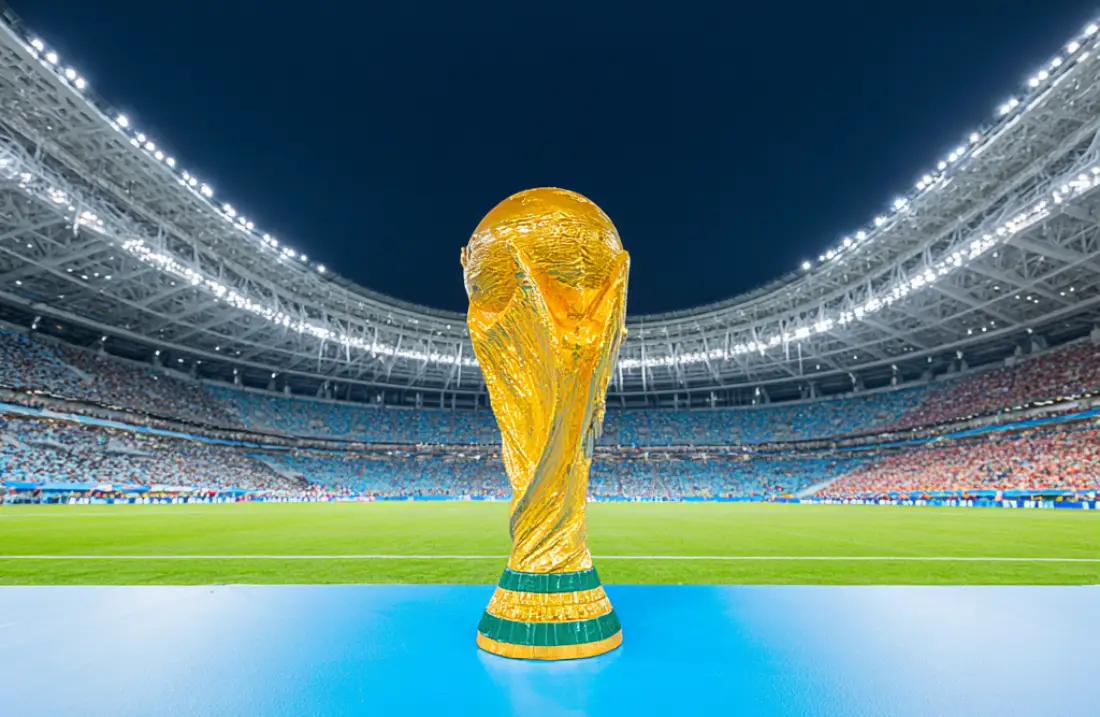
The 2026 FIFA World Cup is the first edition of the tournament to use the forty-eight team format, and the change is the most consequential structural shift in tournament history since 1998. For seven consecutive editions, from France in 1998 through to Qatar in 2022, the World Cup followed the same shape. Thirty-two teams, eight groups of four, sixteen knockout qualifiers, and seven matches between the opening kick-off and the lifting of the trophy. The format had become so familiar that most fans could recite it without thinking. The 2026 edition discards almost all of it.
What follows is a look at how the new format works, what has actually changed, and why the structural decisions made for 2026 will shape the tournament for the rest of the decade.
From 32 Teams to 48
The headline change is the size of the field. The 2026 World Cup features forty-eight teams, expanded from thirty-two. The expansion was approved by the FIFA Council on January 10, 2017, in a unanimous vote, and it represents the largest single-edition increase in tournament history. The previous biggest jump came in 1982, when the field grew from sixteen teams to twenty-four.
The expansion logic was rooted in distributing more places to confederations whose footballing development had been growing across recent cycles. Africa’s allocation grew from five teams to ten. Asia’s grew from six to nine. CONCACAF received six direct slots and one playoff slot, up from three direct slots historically. Oceania received its first ever guaranteed direct berth in tournament history. South America retained six direct slots and one playoff slot. Europe retained sixteen slots, the largest single-confederation allocation, though now representing a smaller share of the overall field than at any previous edition.
Group A
| # | Team | P | W | D | L | Pts |
|---|---|---|---|---|---|---|
| 1 |
 Mexico
|
3 | 3 | 0 | 0 | 9 |
| 2 |
 South Africa
|
3 | 1 | 1 | 1 | 4 |
| 3 |
 South Korea
|
3 | 1 | 0 | 2 | 3 |
| 4 |
 Czechia
|
3 | 0 | 1 | 2 | 1 |
Group B
| # | Team | P | W | D | L | Pts |
|---|---|---|---|---|---|---|
| 1 |
 Switzerland
|
3 | 2 | 1 | 0 | 7 |
| 2 |
 Canada
|
3 | 1 | 1 | 1 | 4 |
| 3 |
 Bosnia and Herzegovina
|
3 | 1 | 1 | 1 | 4 |
| 4 |
 Qatar
Qatar
|
3 | 0 | 1 | 2 | 1 |
Group C
| # | Team | P | W | D | L | Pts |
|---|---|---|---|---|---|---|
| 1 |
 Brazil
|
3 | 2 | 1 | 0 | 7 |
| 2 |
 Morocco
|
3 | 2 | 1 | 0 | 7 |
| 3 |
 United Kingdom
|
3 | 1 | 0 | 2 | 3 |
| 4 |
 Haiti
Haiti
|
3 | 0 | 0 | 3 | 0 |
Group D
| # | Team | P | W | D | L | Pts |
|---|---|---|---|---|---|---|
| 1 |
 United States
|
3 | 2 | 0 | 1 | 6 |
| 2 |
 Australia
|
3 | 1 | 1 | 1 | 4 |
| 3 |
 Paraguay
|
3 | 1 | 1 | 1 | 4 |
| 4 |
 Türkiye
|
3 | 1 | 0 | 2 | 3 |
Group E
| # | Team | P | W | D | L | Pts |
|---|---|---|---|---|---|---|
| 1 |
 Germany
|
3 | 2 | 0 | 1 | 6 |
| 2 |
 Côte d’Ivoire
|
3 | 2 | 0 | 1 | 6 |
| 3 |
 Ecuador
|
3 | 1 | 1 | 1 | 4 |
| 4 |
 Curaçao
|
3 | 0 | 1 | 2 | 1 |
Group F
| # | Team | P | W | D | L | Pts |
|---|---|---|---|---|---|---|
| 1 |
 Netherlands
|
3 | 2 | 1 | 0 | 7 |
| 2 |
 Japan
Japan
|
3 | 1 | 2 | 0 | 5 |
| 3 |
 Sweden
|
3 | 1 | 1 | 1 | 4 |
| 4 |
 Tunisia
|
3 | 0 | 0 | 3 | 0 |
Group G
| # | Team | P | W | D | L | Pts |
|---|---|---|---|---|---|---|
| 1 |
 Belgium
|
3 | 1 | 2 | 0 | 5 |
| 2 |
 Egypt
Egypt
|
3 | 1 | 2 | 0 | 5 |
| 3 |
 Iran
Iran
|
3 | 0 | 3 | 0 | 3 |
| 4 |
 New Zealand
|
3 | 0 | 1 | 2 | 1 |
Group H
| # | Team | P | W | D | L | Pts |
|---|---|---|---|---|---|---|
| 1 |
 Spain
Spain
|
3 | 2 | 1 | 0 | 7 |
| 2 |
 Cape Verde Islands
|
3 | 0 | 3 | 0 | 3 |
| 3 |
 Uruguay
|
3 | 0 | 2 | 1 | 2 |
| 4 |
 Saudi Arabia
|
3 | 0 | 2 | 1 | 2 |
Group I
| # | Team | P | W | D | L | Pts |
|---|---|---|---|---|---|---|
| 1 |
 France
|
3 | 3 | 0 | 0 | 9 |
| 2 |
 Norway
|
3 | 2 | 0 | 1 | 6 |
| 3 |
 Senegal
|
3 | 1 | 0 | 2 | 3 |
| 4 |
 Iraq
Iraq
|
3 | 0 | 0 | 3 | 0 |
Group J
| # | Team | P | W | D | L | Pts |
|---|---|---|---|---|---|---|
| 1 |
 Argentina
|
3 | 3 | 0 | 0 | 9 |
| 2 |
 Austria
|
3 | 1 | 1 | 1 | 4 |
| 3 |
 Algeria
|
3 | 1 | 1 | 1 | 4 |
| 4 |
 Jordan
|
3 | 0 | 0 | 3 | 0 |
Group K
| # | Team | P | W | D | L | Pts |
|---|---|---|---|---|---|---|
| 1 |
 Colombia
|
3 | 2 | 1 | 0 | 7 |
| 2 |
 Portugal
|
3 | 1 | 2 | 0 | 5 |
| 3 |
 Congo DR
|
3 | 1 | 1 | 1 | 4 |
| 4 |
 Uzbekistan
|
3 | 0 | 0 | 3 | 0 |
Group L
| # | Team | P | W | D | L | Pts |
|---|---|---|---|---|---|---|
| 1 |
 United Kingdom
|
3 | 2 | 1 | 0 | 7 |
| 2 |
 Croatia
|
3 | 2 | 0 | 1 | 6 |
| 3 |
 Ghana
Ghana
|
3 | 1 | 1 | 1 | 4 |
| 4 |
 Panama
|
3 | 0 | 0 | 3 | 0 |
Group Stage
| # | Team | P | W | D | L | Pts |
|---|---|---|---|---|---|---|
| 1 |
Congo DR
|
3 | 1 | 1 | 1 | 4 |
| 2 |
Sweden
|
3 | 1 | 1 | 1 | 4 |
| 3 |
Ghana
|
3 | 1 | 1 | 1 | 4 |
| 4 |
Ecuador
|
3 | 1 | 1 | 1 | 4 |
| 5 |
Bosnia and Herzegovina
|
3 | 1 | 1 | 1 | 4 |
| 6 |
Algeria
|
3 | 1 | 1 | 1 | 4 |
| 7 |
Paraguay
|
3 | 1 | 1 | 1 | 4 |
| 8 |
Senegal
|
3 | 1 | 0 | 2 | 3 |
| 9 |
Iran
|
3 | 0 | 3 | 0 | 3 |
| 10 |
South Korea
|
3 | 1 | 0 | 2 | 3 |
| 11 |
United Kingdom
|
3 | 1 | 0 | 2 | 3 |
| 12 |
Uruguay
|
3 | 0 | 2 | 1 | 2 |
The competitive consequence is a field that is meaningfully more diverse than at any World Cup in living memory. Four nations are appearing at their first ever tournament: Cape Verde, Curaçao, Jordan, and Uzbekistan. Curaçao becomes the smallest country by population, with roughly one hundred and fifty-six thousand residents, ever to qualify. Uzbekistan represents the first appearance of a Central Asian nation in tournament history.
Twelve Groups Instead of Eight
The expanded field is divided into twelve groups of four, lettered A through L, replacing the previous eight groups of four. Each team still plays the other three in its group once, producing three group-stage matches per side. The total group-stage match count grows from forty-eight under the old format to seventy-two under the new one.
The top two finishers from each group automatically advance to the knockout phase. That accounts for twenty-four direct qualifiers. The remaining eight knockout slots are filled by the eight best third-placed sides across all twelve groups, ranked by points, goal difference, goals scored, and a series of further tiebreakers. The third-place qualification system is genuinely new to the tournament at this scale, and its presence changes how teams approach their opening matches.
Under the old format, a third-place finish in the group stage meant elimination. Teams approached their three group-stage matches with the knowledge that two wins were typically required to advance, and a single bad night could end the tournament. Under the new format, third place is no longer fatal. Teams can absorb a difficult opening loss and still reach the knockout stage if they recover in their remaining group-stage matches. The math has softened.
A Brand New Round of 32
The structural innovation that most distinguishes 2026 from every World Cup that came before is the new round of thirty-two. The twenty-four direct group-stage qualifiers and the eight third-place qualifiers combine to produce a thirty-two team knockout phase that simply did not exist at past editions.
The round of thirty-two runs from June 27 through June 30, with sixteen single-leg knockout fixtures across four days. Each match produces a definitive winner-and-loser outcome, with extra time and penalties available if the score is level after ninety minutes. From the round of thirty-two onward, the bracket reverts to the familiar architecture of recent tournaments: round of sixteen, quarter-finals, semifinals, final.
The round of thirty-two has been the most controversial part of the new format. Critics argue that it dilutes the competitive intensity of the group stage, since group-stage failure is no longer truly punitive. Supporters argue that it offers smaller footballing nations a more credible path beyond the opening phase, and that the additional fixtures expand the cultural footprint of the tournament. Whichever interpretation one accepts, the round adds approximately seventy-two hours to the tournament’s overall length and produces sixteen additional knockout matches.
Eight Matches to Win the Trophy
The most consequential consequence of the new format, from a competitive standpoint, is that a team that wins the trophy in 2026 will have played eight matches across the thirty-nine days. The previous record, seven matches, applied to every champion from 1986 through 2022.
Eight matches in thirty-nine days is a workload that has shifted how contenders are preparing their squads. Rotation across the group stage is no longer optional. The third-choice goalkeeper, the fourth-choice centre-back, the eighth and ninth midfielders, all of them will play meaningful minutes for any side that intends to be on the pitch at MetLife Stadium on July 19. Squad depth matters more in 2026 than at any previous edition.
The maximum squad size remains at twenty-six players, the same cap that applied at the 2022 tournament. Several federations pushed for an expansion to thirty players in light of the longer tournament, but FIFA confirmed in December 2025 that the cap would remain at twenty-six. Teams may also bring an additional nine training players to their base camps before the first match.
The Bracket Built to Protect Marquee Matchups
A subtler change, but a structurally important one, is how the bracket has been engineered. The four highest-ranked teams in the field have been distributed across opposite sides of the draw, ensuring the top four seeds cannot meet before the semifinal stage. France, Spain, Argentina, and England are placed in protected halves of the bracket. France will not meet Spain before the semifinals. Argentina will not meet England.
The seeding logic is more aggressive than at recent World Cups. Earlier tournaments allowed top seeds to meet in the quarter-finals or even the round of sixteen depending on how the draw broke. The 2026 structure removes that possibility for the top four, concentrating expected-finalist value in those four sides at the expense of the second tier.
What 2026 Tells Us About 2030 and Beyond
Format changes at one World Cup tend to set the template for the editions that follow. The thirty-two team format introduced in 1998 lasted through seven editions before being replaced. The forty-eight team format introduced in 2026 will define the next several tournament cycles. Whatever the 2026 edition produces, in terms of player workload, broadcast appetite, attendance, and competitive integrity, will form the evidence base for how the format is adjusted, defended, or quietly redesigned for 2030 and beyond. The structural decisions made for 2026 sit at the hinge point between the thirty-two team era and whatever comes next.